How to Take Corners in a Go-Kart? 5 Tips for a Faster Lap Time
A go-kart can navigate an entire turn smoothly and still lose precious fractions of a second. All it takes is to brake...
Current business hours
14: 00-22:00 (Mon. - Fr.)
10: 00-22:00 (Sat. - Nd.)
Today, 10.11.2026
10:00 - 16:00
Book by phone
16:00 - 17:30
The track is booked
17:30 - 18:00
Book by phone
18:00 - 20:00
The track is booked
20:00 - 22:00
Book by phone
A go-kart can navigate an entire turn smoothly and still lose precious fractions of a second. All it takes is braking too late, turning too early, or accelerating while the vehicle is still changing direction sharply. If you're wondering, How to Take Corners in a Go-Kart, start by observing not just the speed, but the entire maneuver: from braking to entering the next section.
At our ZygZak track in Bielsko-Biała, you can see the effects of these changes with each lap. The course has two levels and a variable layout, which makes working on your technique more interesting than simply memorizing a single braking point. Below, you’ll find five tips for riders who already know the basics and want to consciously improve their performance.
Key Information
- Exiting a turn quickly It can be more valuable than an aggressive entry, especially when a straight stretch is about to begin.
- To start with Above all, brake before you start turning and choose a consistent reference point.
- The outside–inside–outside sequence is a starting point, but The next turn may require a different setting.
- On ZygZak, compare your own laps against the same configuration and a comparable type of go-kart. A score from a different vehicle class does not reflect the driver's progress alone.
How do you take turns in a go-kart? Start with these four points
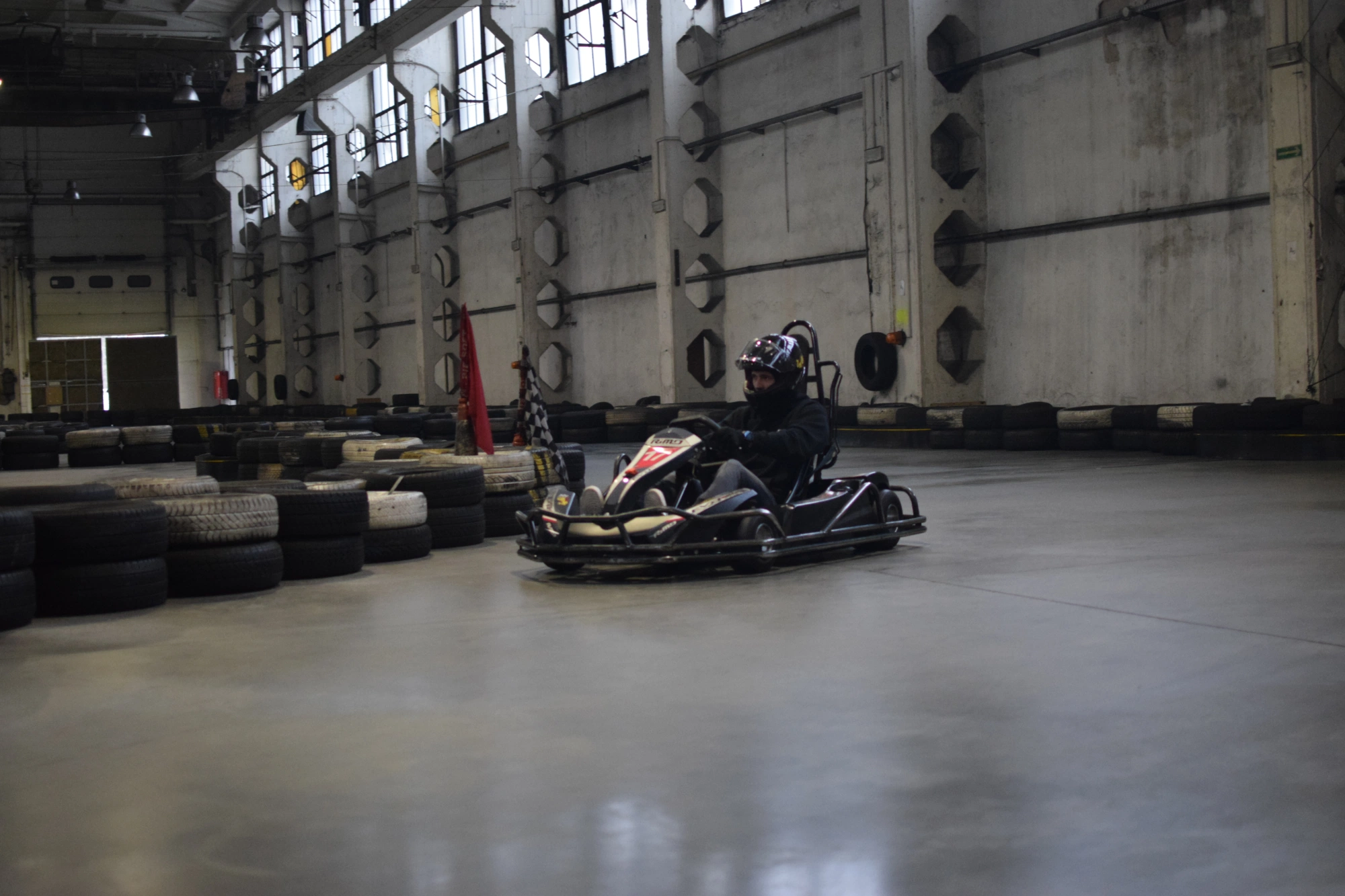
Every turn can be described by four points: the braking point, the turn-in point, the apex, and the exit. Apeks This is the section of the inside of the turn that the go-kart is approaching. It does not have to be exactly halfway along the curve. For example, before a long straight, a later apex can make it easier to straighten the steering wheel sooner and accelerate more effectively.
A good lap is the result of combining these points. When a driver accelerates aggressively at the entrance at all costs, they often have to turn more sharply, correct their line, or ease off the gas afterward. It is precisely these corrections that can lead to time losses. It’s best to practice the technique step by step, rather than trying to change everything in a single lap.
Five techniques worth practicing on the track
1. Determine a fixed braking point
Choose a visible, stationary point before the turn and use it as a reference point for when to start braking. This could be a road sign or another fixed feature in the surroundings that doesn’t require you to get close to the barrier. This way, on subsequent laps, you can compare whether a similar entry speed actually results in a better exit.
While studying Slow down even more on straight sections, before making your main steering move. Braking hard and turning at the same time reduces your grip. If the go-kart strays from the optimal line, don’t automatically move your braking point further back. First, check whether you need to start the maneuver a little earlier and more gently. Advanced braking techniques during the initial phase of a turn require greater skill and do not replace the safety rules in effect on the track.
2. Select the line for the next section of the route
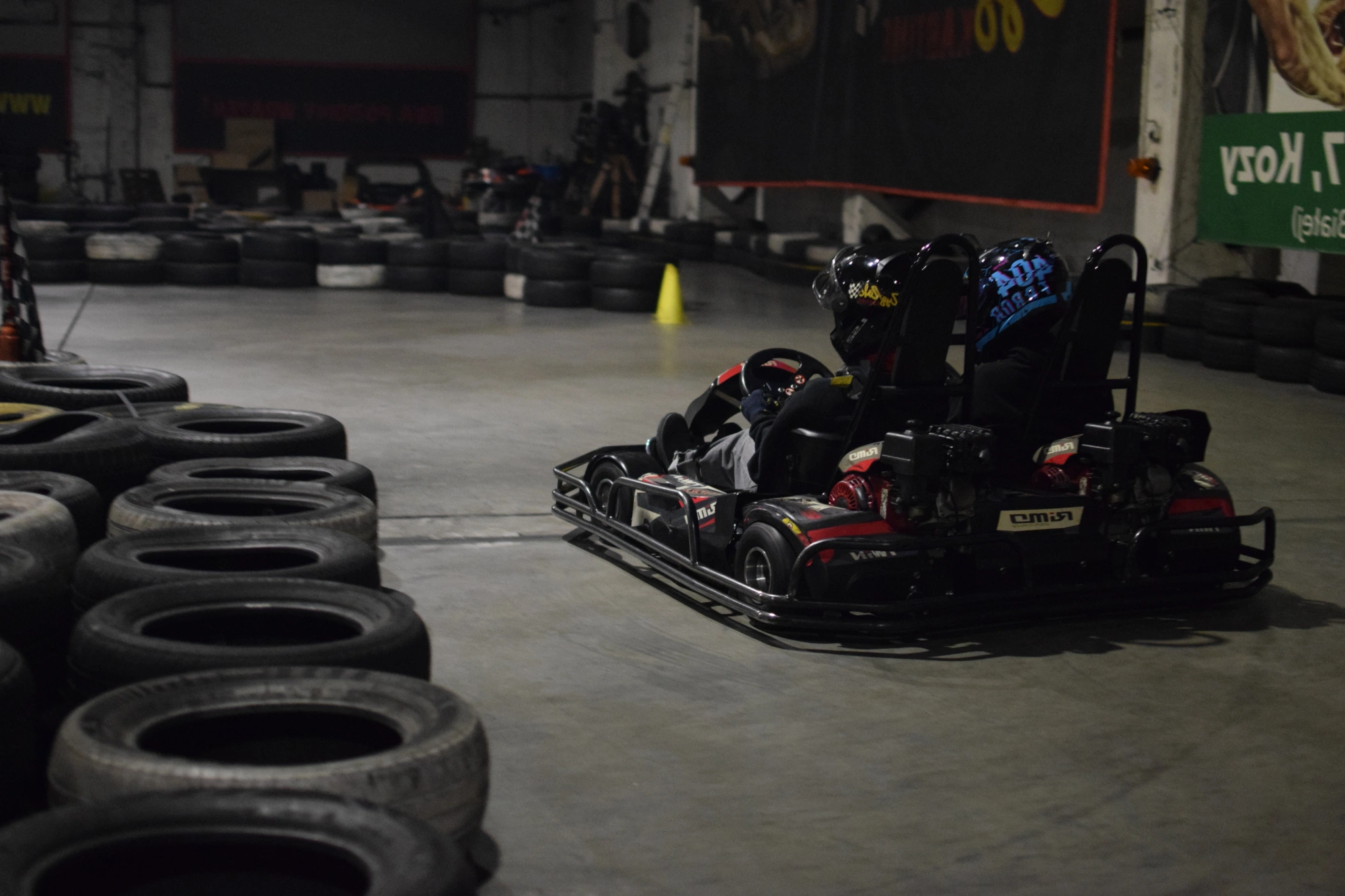
The classic line through a turn leads from the outside of the track, through its inside point, to a wider exit. This approach usually allows you to take the turn with a larger radius and minimize the amount of steering input required. However, this does not mean that you should touch the inside edge at all costs on every turn.
If a left turn is immediately followed by a right turn, taking the first turn too wide can ruin your position for the second one. In such a situation, it’s sometimes better to take the first turn a little slower but position the go-kart for a better exit into the next one. The racing line is intended to cover the entire sequence of turns, rather than a single, spectacular maneuver. You can check the layout of our facility on the website About the ZygZak Track.
3. Look at the spot where you want to finish the turn
Before entering a turn, look toward the apex, and then start looking for the exit and the next landmark. Staring right in front of the go-kart often leads to delayed reactions: the driver doesn’t realize they’re taking the turn too wide until they have to make a sudden steering correction.
It’s important to keep an eye on the visible section of the road ahead, not to focus your gaze on the vehicle in front of you. If there’s someone close by, maintaining a safe following distance and driving predictably are your top priorities. Keeping your eyes on the road makes it easier to anticipate turns, but it doesn’t mean you should stop watching other road users.
4. Minimize unnecessary steering movements
At the correct entry speed, one firm, smooth steering input is usually enough, followed by gradually straightening the steering wheel. If you find yourself having to turn the steering wheel back and forth repeatedly, take a closer look at your chosen line and speed. The problem isn’t always that you’re not turning enough; often, you’re simply entering the turn too fast.
Visible sliding may look dynamic, but in a typical time trial, it means a loss of traction and speed. Check to see if the go-kart starts to „push” the front end outward on the outside of the turn. In that case, it’s better to adjust your speed and entry point on the next lap than to fight the steering wheel in the middle of the turn.
5. Accelerate when you can turn the steering wheel
The most important part of a turn often begins after you’ve passed the apex. Once the go-kart is pointed toward the exit and you can gradually straighten the wheels, increase throttle smoothly. If you apply the gas too abruptly during a sharp turn, you may cause the kart to slide or be forced to ease off the gas again.
Before a straightaway, a slight loss of speed at the start may pay off thanks to better acceleration at the end. When evaluating this, How to Take Corners in a Go-Kart, so what lies beyond the curve also matters. The goal is not to brake as late as possible, but to exit the turn without having to correct your line and without losing control.
How can you tell if a technique really improves your time on the ZigZag?
On our track, you can use lap timing for a simple training session. During your first session, familiarize yourself with the current setup and note your own consistent lap times. Then choose one corner where you regularly lose your rhythm. On your next lap, change just one element—for example, your braking point. Only after a few comparable laps should you assess whether the new driving technique is helping.
Do not directly compare results from different kart classes. At ZygZak, models with 6.5 KM and 9 KM engines are available, among others, and eligibility for a more powerful vehicle depends on meeting the track’s requirements. Similarly, a change in the track configuration means that lap time is no longer a simple measure of progress. You can find information about the vehicles on the website Our go-karts, and the results in the respective categories on the website Track Records.
After each drive, write down one observation that you can verify on your next visit: „I’m turning too early before the straightaway” or „I need to ease off the gas after the second turn.” A specific goal like this is more useful than simply resolving to ride faster next time. If there’s heavy traffic on the track, treat lap time comparisons as a rough guide; safety and yielding the right of way according to track rules are more important than a single lap.
Frequently Asked Questions
Is it best to take every turn from the outside to the inside?
This is a good starting point, but it’s not a one-size-fits-all rule. In a sequence of several turns, it’s sometimes better to position the vehicle for the next turn rather than taking the first turn as wide as possible. The best line depends on the track layout, traction, and track conditions.
Does a more powerful go-kart automatically mean better driving technique?
No. A more powerful vehicle may achieve a different time for reasons unrelated to the driver's skill. To assess progress, compare results within the same vehicle category and on a comparable track layout.
Is it worth practicing the fastest line when there are other drivers on the track?
Only if the maneuver does not pose a danger. Do not change your driving line abruptly, do not block others, and follow the staff’s instructions. When driving on the track, the primary goal is predictable driving; analyzing lap times comes second.
Summary
The best way to improve your score is to choose one turn and one gear change, and then test it under consistent conditions. If you want to test it in practice, How to Take Corners in a Go-Kart, plan your next run on ZygZak and treat your time as a measure of progress, not a race at all costs. It’s precisely consistency in braking, line choice, and acceleration that allows you to develop your technique without taking unnecessary risks.
Latest News

November 11: Independence Day—LET'S GO!
How to Take Corners in a Go-Kart? 5 Tips for a Faster Lap Time
The Best Attractions in Bielsko-Biała